A de-shedding treatment is the most requested and least understood service for double-coated dogs in Statesville. Owners of shepherds, huskies, retrievers, and corgis want the hair in the house reduced, and groomers offer a process that helps, but it is often confused with shaving, which is nearly the opposite of what a de-shedding treatment does.
This comparison lays the genuine options side by side: a standard bath and brush-out, a full de-shedding treatment, home brushing with an undercoat rake, and the shave that groomers keep advising against. Each has a real place, and one of them has a real cost that is not obvious until the coat grows back.
What a double coat is doing
A double coat has two layers with two jobs. The outer guard hairs are longer, coarser, and water-resistant; they protect against sun, brush, and weather. The undercoat is soft, dense, and insulating, and it is the layer that sheds in quantity, especially during the spring and fall coat changes. Together they regulate temperature in both directions, which is why a dog in a full double coat can be comfortable in a Piedmont summer if the loose undercoat is kept brushed out.
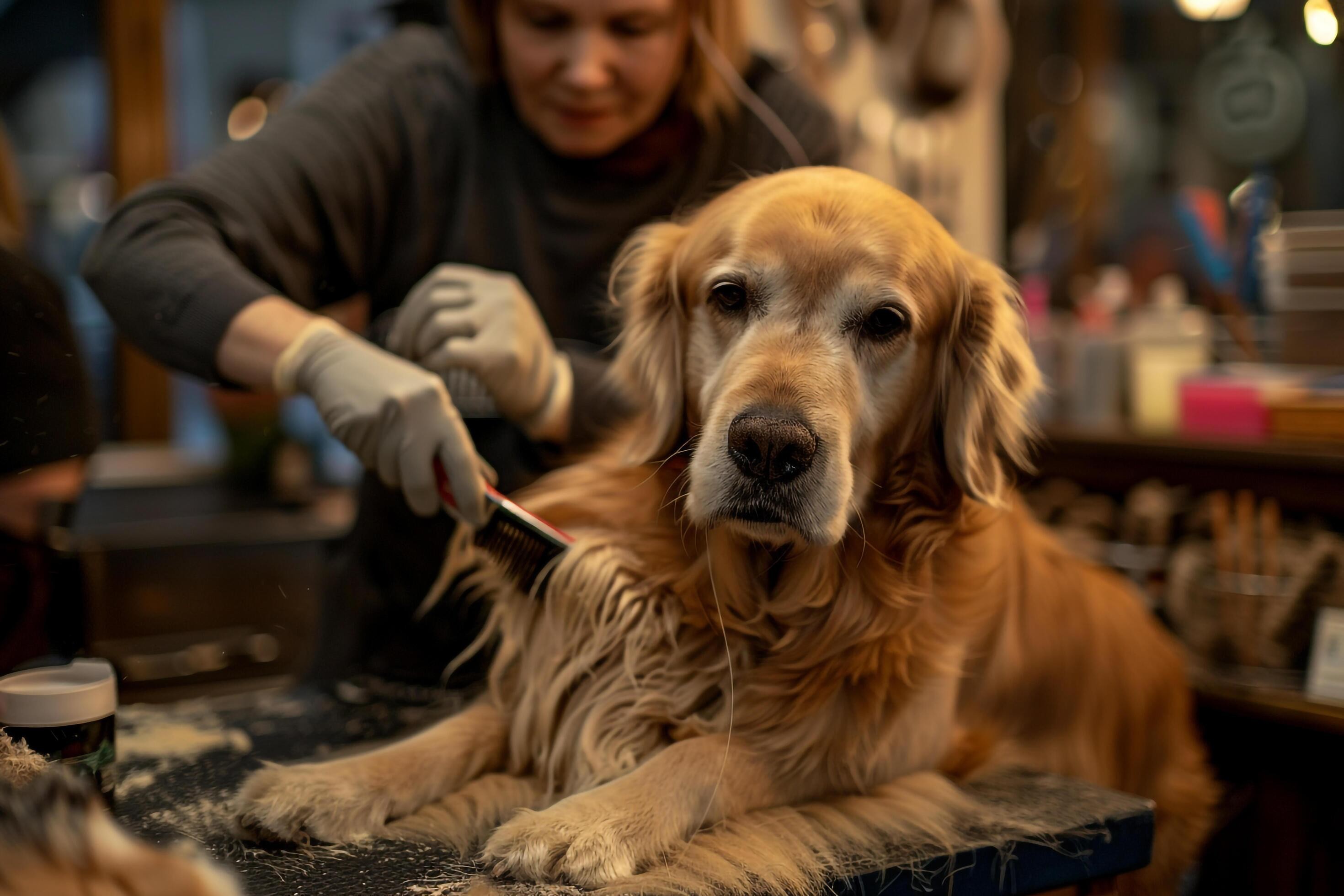
De-shedding is entirely about that undercoat. Loose undercoat that stays in the coat packs down, blocks airflow, and eventually felts. Removing it, by bath, dryer, rake, and brush, restores the coat's function and takes most of the loose hair out in the salon instead of on your floors over the following month.
The options, side by side
Read across for what each approach actually does, what it cannot do, and who it suits. The differences are mostly about how much loose undercoat leaves with the appointment and how long the effect lasts.
| Option | What it does | Limits | Best for |
|---|---|---|---|
| Standard bath and brush-out | Cleans the coat and removes surface loose hair; some undercoat releases in the bath and dry | Leaves deeper loose undercoat behind; effect fades in about a week during a coat blow | Routine upkeep outside peak shedding season |
| Full de-shedding treatment | Loosening bath products, high-velocity drying, and systematic rake and brush work remove the bulk of ready undercoat | Cannot stop the shedding cycle; new loose hair follows in a few weeks | Peak spring and fall shed, and dogs whose undercoat has started to pack |
| Home brushing with an undercoat rake | Removes loose undercoat gradually, session by session, at no appointment cost | Easy to under-do hidden areas or over-rake one spot; results depend on technique and consistency | Owners who will brush ten minutes several times a week |
| Shaving the coat short | Removes both layers at once, so shedding hair is shorter | Destroys insulation and sun protection; regrowth can be patchy or permanently altered; the dog still sheds | Almost never the right answer; reserved for medical or severe matting cases |
Why groomers refuse the shave
Owners ask for shaved double coats every summer, usually believing the dog will be cooler. The coat does not work that way. Shaved skin loses its shade and its airflow layer at once, sunburn becomes a real risk, and the dog can end up hotter, not cooler. Then comes the long tail: undercoat often regrows faster than guard hairs, so the coat can come back woolly and uneven, and in some dogs, particularly older ones and certain breeds, it never fully returns to its original texture.
A groomer declining to shave is not being difficult; they are declining to do a service whose downside the owner will live with for years. The alternative they offer, a proper de-shedding treatment, addresses the actual complaint, which is loose hair, without touching the coat's structure.
At Dog Gone Gorgeous, a de-shedding visit also ends with a realistic interval: during a coat blow, many double-coated dogs do best on a four-to-six-week rhythm, stretching longer in quiet seasons. Bring the dog before the undercoat packs, and every option in the table stays available.
Common questions
How long does a de-shedding treatment keep hair off my floors?
Typically a few weeks of noticeably reduced loose hair, with the biggest effect in the first two. During a heavy coat blow, no treatment holds longer than the cycle allows, which is why groomers suggest a shorter interval then.
Can de-shedding damage the coat if done too often?
Done properly, no: it removes hair that is already loose. Damage comes from over-raking one spot in home sessions or from shaving, not from regular bath-and-brush de-shedding.
My double-coated dog seems hot in summer. What actually helps?
Brushing out loose undercoat so air moves through the coat, shade and water outdoors, and exercise in the cooler hours. If panting or discomfort seems excessive, a veterinarian should check for causes beyond coat.
Photos in this guide are representative stock images.
← All guides from Dog Gone Gorgeous← Back to Dog Gone Gorgeous